
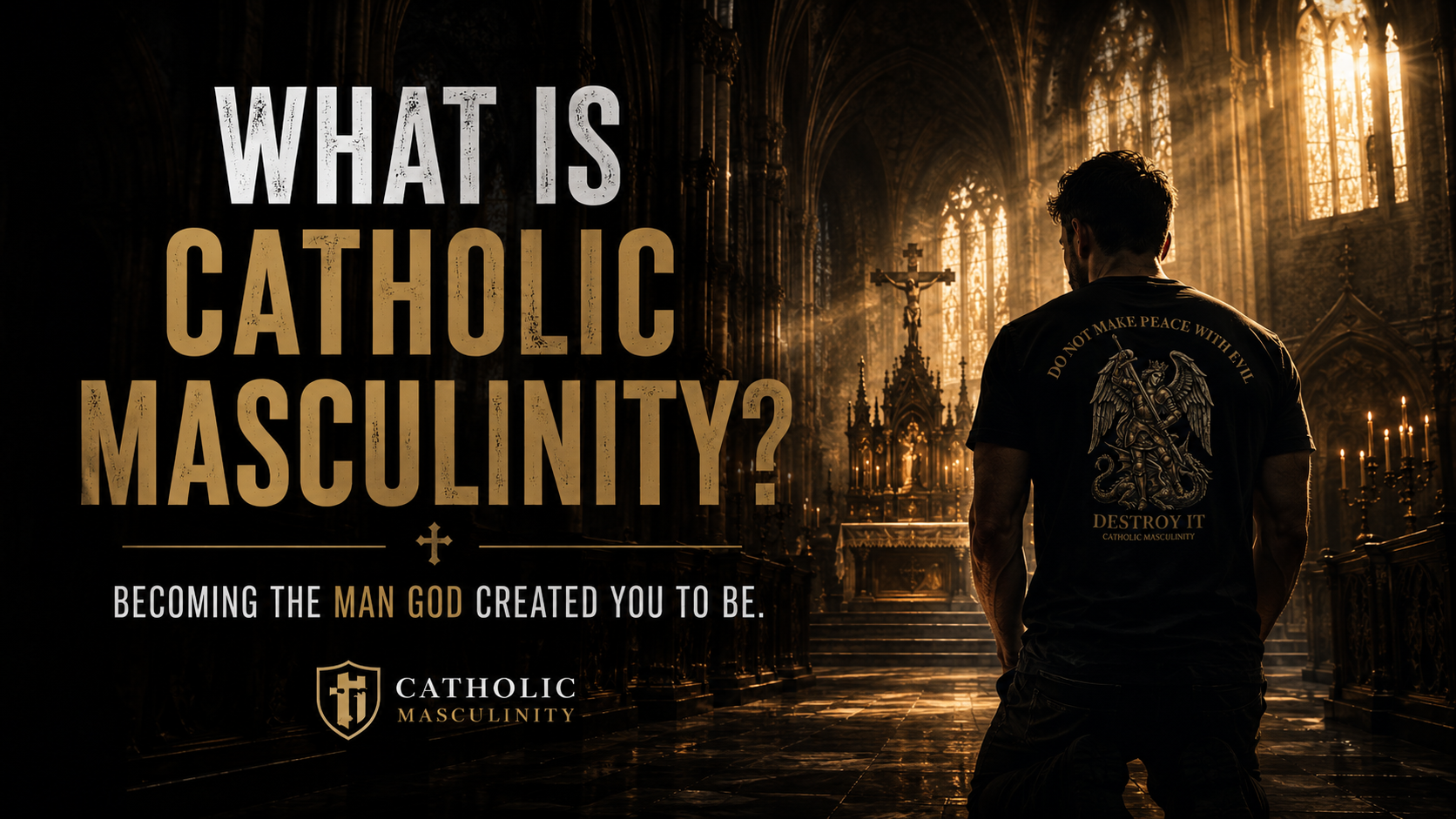
What Is Catholic Masculinity?
It All Begins Here…
Modern culture has no shortage of opinions about masculinity.
Some define manhood through wealth, status, physical strength, or influence. Others reject masculinity altogether, portraying it as something dangerous or outdated. As a result, many men find themselves confused about what it truly means to be a man.
Catholic masculinity offers a different answer.
It is not rooted in dominance, aggression, or self-promotion. It is rooted in Jesus Christ.
Catholic masculinity is the pursuit of authentic manhood through prayer, discipline, sacrifice, leadership, and holiness.
It is the understanding that a man was not created merely to pursue comfort, pleasure, or success. He was created to know God, serve God, and become a saint.
Catholic Masculinity Begins With Christ
Every discussion about masculinity must begin with Jesus Christ.
The modern world often presents masculinity as self-assertion. The Gospel presents masculinity as self-sacrifice.
Christ is the perfect example of Catholic manhood. He possessed strength without cruelty, authority without pride, courage without recklessness, and leadership without selfishness.
He fasted in the desert.
He confronted evil directly.
He protected the weak.
He carried His Cross willingly.
He laid down His life for others.
Catholic men are called to imitate Christ in every area of life.
This is the foundation of Catholic masculinity.
Catholic Discipline Is Essential
No man becomes holy by accident.
Catholic discipline is the practice of ordering one's life toward God through consistent habits and self-mastery.
The saints understood that the spiritual life requires effort. Prayer, fasting, self-denial, and perseverance have always been part of authentic Catholic living.
Catholic discipline means:
Maintaining a consistent prayer life.
Attending Mass faithfully.
Going to Confession regularly.
Practicing fasting and penance.
Rejecting habitual sin.
Developing self-control.
Modern culture teaches comfort. Catholic discipline teaches sacrifice.
A disciplined man is not controlled by his emotions, desires, or impulses. He learns to govern himself so that he can better serve God and those entrusted to his care.
Catholic Leadership Starts With Service
Many people associate leadership with power.
Catholic leadership begins with responsibility.
A Catholic man leads first by example.
He leads through integrity.
He leads through sacrifice.
He leads through consistency.
Whether he is a husband, father, priest, employer, employee, or student, his responsibility is the same: to help lead others toward God.
The greatest leaders in Christian history were not those who demanded to be served. They were those who willingly served others.
This is why Catholic leadership is fundamentally different from worldly leadership.
The Catholic man asks:
"How can I serve?"
before asking:
"How can I succeed?"
Catholic Spirituality Requires Strength
Authentic Catholic spirituality is not passive.
Scripture repeatedly describes the Christian life as a battle.
Saint Paul speaks of spiritual armor.
The saints speak of warfare against temptation.
The Church teaches vigilance, prayer, and perseverance.
Catholic men are called to recognize that they live in the midst of a spiritual battle.
This does not mean living in fear.
It means living with awareness.
Prayer is a weapon.
The Rosary is a weapon.
The sacraments are weapons.
The saints understood that holiness requires vigilance and effort.
Catholic spirituality is not about escaping reality. It is about confronting reality with faith, courage, and trust in God.
Catholic Men Must Reject Comfort As A Way Of Life
Comfort itself is not evil.
The problem arises when comfort becomes a man's highest goal.
Many of the struggles facing modern men stem from a culture that constantly encourages ease, entertainment, and distraction.
Catholic men are called to something higher.
They are called to embrace sacrifice.
To carry responsibilities.
To endure suffering when necessary.
To remain faithful when obedience is difficult.
The saints were not remembered because they pursued comfort.
They are remembered because they pursued holiness.
Every Catholic man must eventually decide whether he desires comfort or greatness.
The two are rarely found together.
The Goal Of Catholic Masculinity
The goal of Catholic masculinity is not admiration.
It is not status.
It is not influence.
It is holiness.
A Catholic man strives to become the man God created him to be.
He prays.
He leads.
He sacrifices.
He serves.
He fights against sin.
He pursues virtue.
Most importantly, he seeks union with Jesus Christ.
In a world that often misunderstands masculinity, Catholic men are called to rediscover an ancient truth:
True strength is found in self-mastery.
True leadership is found in service.
True masculinity is found in Christ.
That is Catholic masculinity.